
7 Eye Symptoms That Need Immediate Medical Attention
Eyes help us read, work, move, and see faces we love. Yet many people ignore small changes in vision or comfort. Some eye problems symptoms start mild and feel easy to ignore. But certain eye symptoms may signal a serious issue inside the eye. When warning signs appear, the body asks for quick attention. Knowing the early signs and symptoms of eye problems can protect sight. If something unusual happens, you should not wait days hoping it will pass. Quick care from a trained doctor may save vision and comfort.
|
Content of The Article |
7 Eye Symptoms You Should Never Ignore
Here are the eye symptoms that should never be ignored, they can signal serious conditions that may lead to vision loss if not treated quickly:
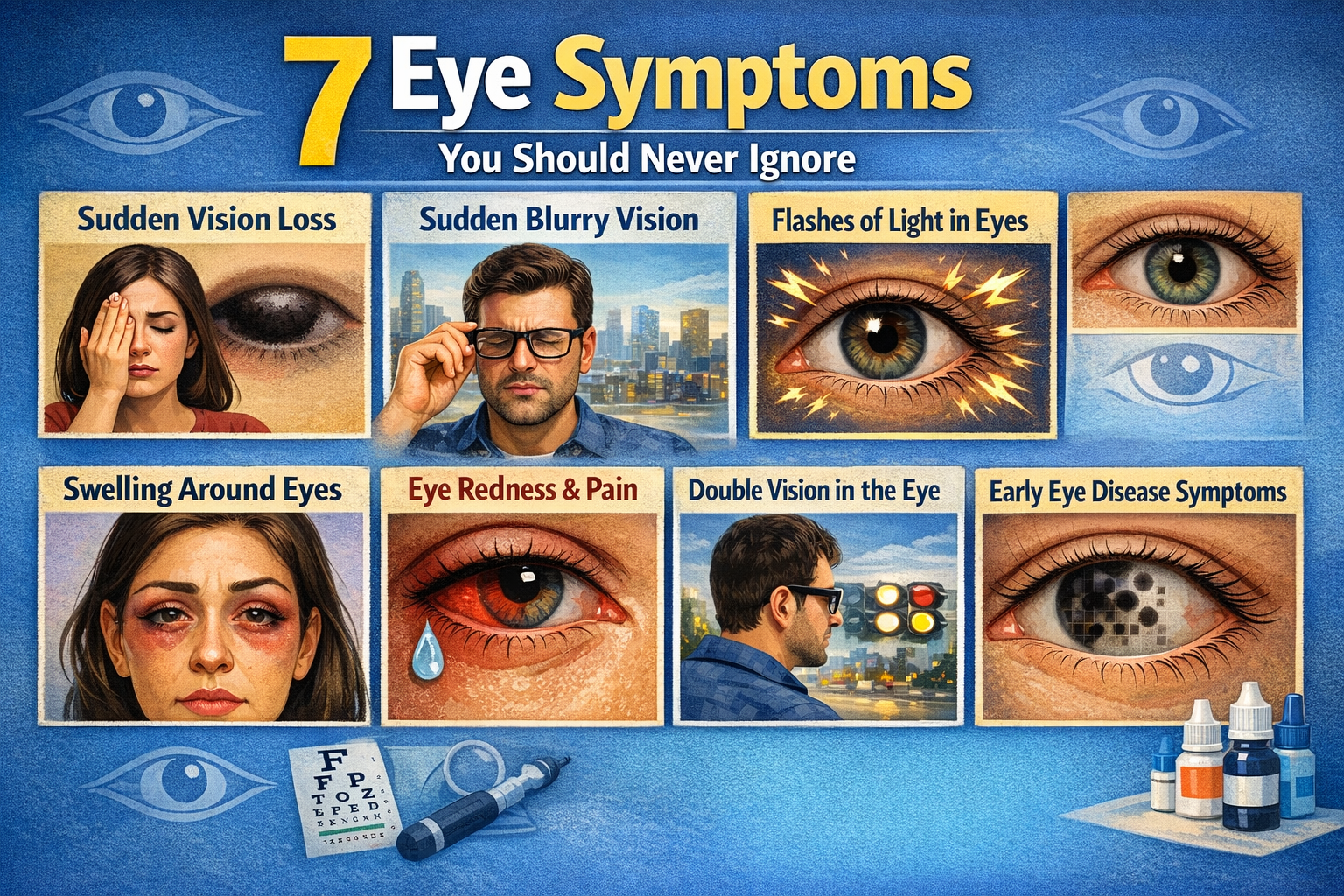
1. Sudden Vision Loss
Sudden vision loss is one of the most alarming changes a person can face. Sight may fade in one eye or both within minutes or hours. Many people think it will return after rest. That delay can harm the eye.
Causes may include blocked blood flow, retinal damage, or nerve trouble. Warning points often include:
- Dark shadow across vision
- Trouble seeing shapes or faces
- Sudden trouble reading words
If this change appears, seek medical care the same day. Early treatment gives doctors a better chance to protect remaining sight and prevent lasting damage to vision.
2. Sudden Blurry Vision
Sudden blurry vision can make daily tasks confusing and unsafe. Letters on a phone screen may blend together. Road signs look soft and unclear. Many people blame tired eyes or long screen time. That guess may hide a deeper problem.
Possible causes include:
- Cornea injury
- High eye pressure
- Infection
- Retina trouble
Pay attention if blurred vision appears with headache, nausea, or light sensitivity. Those signs suggest the eye needs a quick review. Visit a doctor instead of waiting days for clarity to return. Fast testing may stop damage and help restore clear sight again.
3. Flashes of Light in Eyes
Flashes of light in the eyes may look like quick sparks or thin lightning lines across vision. They often appear in dark rooms or when the eyes move fast. Some people think it is simple eye strain.
In truth, these flashes may point to a retinal tear or pulling gel inside the eye.
Watch for added signs such as:
- Floating black spots
- A curtain-like shadow
- Trouble seeing side areas
When such changes begin, call an eye doctor soon. Delay can allow the retina to detach, which may lead to severe vision loss.
4. Swelling Around Eyes
Swelling around the eyes can appear after sleep loss, an allergy, or an infection. The skin near the eyelids may look puffy, warm, and tight. Mild swelling may pass with rest. Yet strong swelling with pain, fever, or vision change needs medical care.
Doctors check for:
- Infection
- Blocked tear ducts
- Injury near the eye
Notice if the area feels hard or spreads toward the cheek. Quick care helps stop infection from moving deeper into the tissue around the eye. Ignoring such a change may lead to serious eye trouble later.
5. Eye Redness and Pain
Eye redness and pain often appear during infection or strong irritation. The white area of the eye may turn bright red, and blinking becomes uncomfortable. Some people wash their eyes and hope for relief.
If redness joins deep pain, blurred sight, or discharge, the issue may be serious.
Possible causes include:
- Cornea scratch
- Inflammation inside the eye
- Pressure rise
Avoid rubbing the eye during this time. Seek medical help if the discomfort stays for many hours or if vision begins to change suddenly.
6. Double Vision in the Eye
Double vision in the eye creates two images of one object. Reading becomes tiring, and walking may feel unsafe. Some people close one eye to manage the problem for a short time.
This symptom may come from:
- Nerve weakness
- Muscle imbalance
- Head injury
- Brain-related illness
Doctors test eye movement and nerve control to find the cause. Watch for warning signs like headache, drooping eyelid, or trouble speaking. These signals demand a quick medical review. Early care may prevent deeper nerve damage and help restore stable single vision.
7. Early Eye Disease Symptoms
Many people ignore slow changes because they seem small. Yet several eye disease symptoms begin with mild discomfort or vision change.
These may include:
- Dry feeling inside the eye
- Trouble seeing at night
- Light sensitivity
- Patchy blind spots
When these patterns appear again and again, a full eye check becomes necessary. Doctors study the retina, lens, pressure, and nerves. Early detection can slow many conditions and protect daily sight for years. Do not wait until vision drops heavily before asking for medical advice from a trained eye doctor.
Trusted Eye Treatment at Noble Eye Care
Noble Eye Care is a super specialty eye care centre founded and run by doctors trained at AIIMS. The clinic focuses on clear diagnosis, honest advice, and careful treatment for people facing vision trouble.
Patients often search online for an eye specialist in Gurgaon when symptoms begin or when vision feels different. The team at Noble Eye Care studies each case with patience and structured testing methods. The centre manages retinal problems, cornea issues, cataracts, glaucoma, and nerve-related vision trouble.
Modern diagnostic tools help doctors view deep eye structures and plan proper care. Patients receive guidance about treatment choices, recovery time, and daily eye care habits.
Also Read: Early Signs of Retina Damage: Causes, Symptoms & Care Tips
Conclusion
Eye health often changes without a loud warning. Small discomfort, blur, or light flashes may feel easy to dismiss during busy days. Yet vision is delicate, and damage can grow when care is delayed. Watching for unusual signs and acting fast protects sight and daily life quality. If any symptom discussed above appears, seek medical advice the same day. Quick examination and treatment may stop deeper injury inside the eye and keep your vision clear, stable, and dependable for many future years of work, family, reading, travel, and normal living ahead.
FAQs
If vision changes without a clear reason, seek medical care the same day. Avoid driving or heavy work until a doctor checks the eyes. Quick testing helps find the cause and prevents further damage to sight, daily activities, and safety.
Eye pain with redness, discharge, or light sensitivity may suggest infection or inflammation. Do not self-medicate with random drops. A doctor should examine the eye and decide the proper medication dosage and care plan to protect vision health and comfort.
Many people skip eye exams when their vision feels normal. Hidden conditions can grow without early discomfort. Routine eye checks allow doctors to detect disease early and protect long-term vision health through timely treatment and lifestyle advice when needed later.
Long screen hours may cause dryness, strain, headache, and tired eyes. Follow simple habits such as short breaks, proper lighting, and blinking often. If discomfort stays for days, consult an eye doctor for examination and guidance about safe digital use.
Visit an eye clinic when vision changes, pain appears, light feels harsh, or swelling forms near the eyelids. Early consultation helps doctors diagnose the issue and start treatment before the condition harms daily sight, comfort, work safety, and independence later.
Leave a Comment
(0 Comments)