
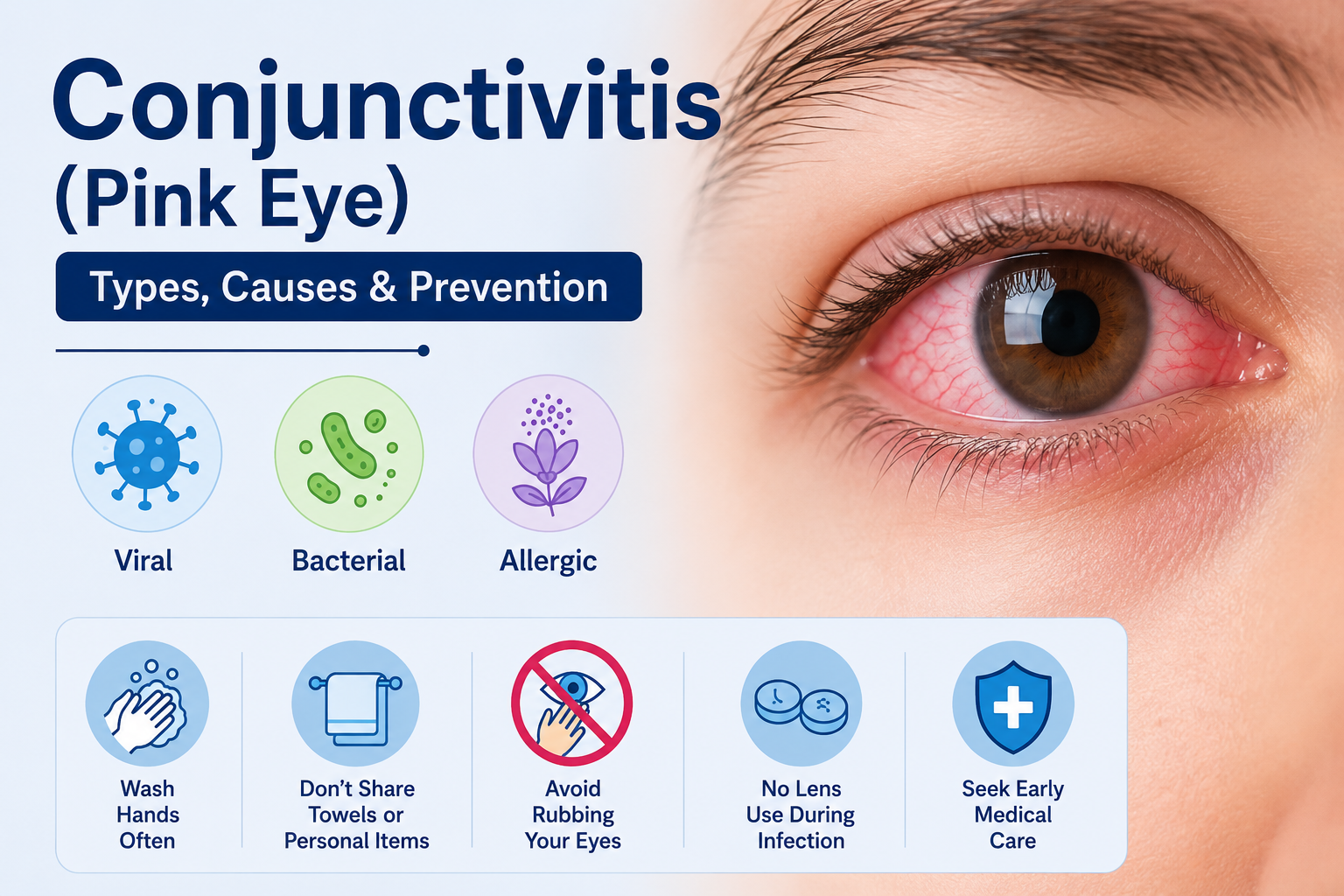
Conjunctivitis (Pink Eye): Types, Causes & Prevention
Overall Summary
In this article, conjunctivitis is explained in simple terms. It covers viral, bacterial and allergic types, common signs like redness, watering, itching and sticky lids. It also explains how infections spread, how long recovery takes and which treatments suit each cause.
Clean hands, fresh towels, no lens use and early care help avoid trouble and protect eye health daily for families, workers, and students during seasonal outbreaks with better habits and prompt medical review when pain rises or vision blurs suddenly.
Key Takeaways
- Early signs include redness, watering, itching, and sticky eyelids, often daily.
- Viral cases spread through hands, towels, makeup, and lenses quickly nearby.
- Bacterial cases may need prescribed drops with careful cleaning routines.
- Allergic cases start from dust, pollen, weather change, triggers exposure.
- Avoid rubbing your eyes and stop wearing contact lenses during infection periods.
- Seek prompt care if pain grows, vision blurs suddenly badly.
Introduction
Eyes get ignored until they start burning. Then everything stops. Work slows, reading feels heavy, and even light becomes annoying. Many people face this at least once, yet they don’t always know what they are dealing with.
Some call it an infection, some say an allergy, and others panic and rush for drops. The truth sits in between. Understanding what is conjunctivitis pink eye helps clear the confusion early, and that makes a big difference when symptoms start showing up in daily life.
|
Content of The Article
|
What is Conjunctivitis Disease?
Start with the basics. What is conjunctivitis disease in simple terms? It is an inflammation of the thin, clear layer that covers the white part of the eye and inner eyelids. That layer is called the conjunctiva. When it gets irritated, the eye turns red, swollen, and watery.
This condition is not always serious, but it spreads fast in some cases. That is where people get careless. They treat it like dust irritation, but it may be more than that.
Types of Eye Conjunctivitis
Not all cases are the same. Each type behaves in its own way, and the treatment changes with it. Doctors usually divide eye conjunctivitis into three main types.
- Viral conjunctivitis: This one spreads fast. It often comes with a cold or throat infection. Eyes feel gritty, and water keeps coming.
- Bacterial conjunctivitis: Thick discharge is common here. Eyelids may stick together in the morning. It needs proper care.
- Allergic conjunctivitis: This is linked to dust, pollen, or weather change. Both eyes get itchy at the same time.
Knowing the type saves time. Wrong treatment only drags the problem longer.
Common Conjunctivitis Symptoms
The signs are easy to notice if you pay attention. People often ignore early changes, which delays care. Watch for these conjunctivitis symptoms:
- Redness in one or both eyes
- Burning or itching feeling
- Watering or discharge
- Sticky eyelids, mostly after sleep
- Sensitivity to light
- Slight swelling around the eyes
Some feel mild discomfort. Others feel constant irritation throughout the day. It depends on the cause and how fast treatment starts.
How Does Conjunctivitis Spread
This is where most confusion happens. People assume it spreads only by looking into someone’s eyes. That is not true. Understanding how does conjunctivitis spread helps stop it early.
- Direct contact with infected eye discharge
- Sharing towels, pillows, or makeup
- Touching eyes with unclean hands
- Using contaminated contact lenses
- Close physical contact in crowded places
That said, one question keeps coming up. Does conjunctivitis spread by eye contact alone? No. Just looking at someone does not spread it. Physical transfer of germs is needed.
How Long Does Eye Conjunctivitis Last
People want quick relief. But healing takes time. So, how long does eye conjunctivitis last depends on the type.
Here is a simple view:
| Type | Usual Duration | Notes |
| Viral | 1 to 2 weeks | Clears on its own in many cases |
| Bacterial | 5 to 7 days with treatment | Needs proper drops |
| Allergic | Varies | Depends on trigger exposure |
Delays happen when care is ignored. Also, when people stop treatment early.
Conjunctivitis Treatment Options
Treatment is not the same for everyone. It depends on the cause. Still, a few standard methods guide conjunctivitis treatment.
- Antibiotic eye drops for bacterial cases
- Lubricating drops for dryness and irritation
- Cold compress to reduce swelling
- Anti-allergy medicines for allergic cases
- Proper eye cleaning to remove discharge
Self-medication can go wrong here. Using random drops without knowing the cause often makes things worse.
How to Cure Conjunctivitis Safely
Many people search for quick fixes online. But how to cure conjunctivitis is not about speed. It is about the right care.
- Keep your hands clean at all times
- Avoid touching or rubbing the eyes
- Use clean cloths or tissues
- Do not share personal items
- Follow the full course of prescribed drops
And one more thing. Do not wear contact lenses during an infection. It slows recovery and may cause more damage.
Prevention Tips That Actually Work
Stopping it early is easier than treating it later. Prevention needs discipline, not effort.
- Wash your hands often, especially after touching your face
- Keep towels and pillow covers clean
- Avoid sharing eye cosmetics
- Stay away from crowded spaces during infection
- Protect eyes from dust and pollution
Small habits matter here. Most infections spread because people ignore these basics.
Special Care for Children
Children catch infections faster. They touch everything and rarely follow hygiene rules. Eye infections spread quickly in schools and play areas.
Parents should watch for redness, watering, or irritation. Early check-ups help avoid complications. Also, internal linking with Pediatric Ophthalmology ensures children get focused care suited to their age and eye development.
Noble Eye Care
Noble Eye Care works with a simple approach. Clear diagnosis, careful treatment, and patient comfort. The centre is founded and run by AIIMS alumni, and it focuses on ethical and compassionate eye care. Cases like conjunctivitis need attention, but not panic.
Our team handles routine infections, advanced eye issues, and child eye care under one roof. Clean setup, trained staff, and steady guidance help patients recover without confusion or delay.
Also Read: Uveitis in Eye: Types, Symptoms and Treatment
Final Thoughts
Eye infections look small at first. Then they grow into daily trouble. Ignoring redness or watering may seem harmless, but it often leads to longer recovery and more discomfort. Knowing the type, spotting early signs, and taking proper care changes the whole experience.
Conjunctivitis is common, yet it demands attention. Simple hygiene, correct treatment, and a bit of patience keep it under control. When handled right, the eyes return to normal without lasting issues. When ignored, they don’t stay quiet for long.
FAQs
What causes pink eye or conjunctivitis?
Pink eye often starts from viruses, bacteria, pollen, dust, dirty hands, and shared towels. Contact lenses and touching irritated eyes can also trigger fresh infection quite fast in many people daily.
How long does pink eye usually last?
Mild viral cases may clear within one to two weeks. Bacterial cases often improve in days after proper drops. Allergic cases last until triggers stop fully for some people.
Is pink eye contagious and how does it spread?
Viral and bacterial pink eye spreads through discharge, dirty hands, towels, pillows and makeup. Looking at someone alone does not spread the infection to others nearby at all today
What is the best treatment for pink eye?
Treatment depends on the cause. Doctors may use antibiotic drops, lubricating drops, cold compresses or allergy medicine. Avoid random drops without advice first for safe healing and comfort each time.
How can I prevent conjunctivitis at home and outside?
Wash hands often, keep towels clean, avoid sharing cosmetics, stop rubbing eyes, replace old lenses and stay home during active infection to protect family members and classmates nearby each day.
Leave a Comment
(0 Comments)